09 Feb How to Know if Your Bird is Ready for Free Flight
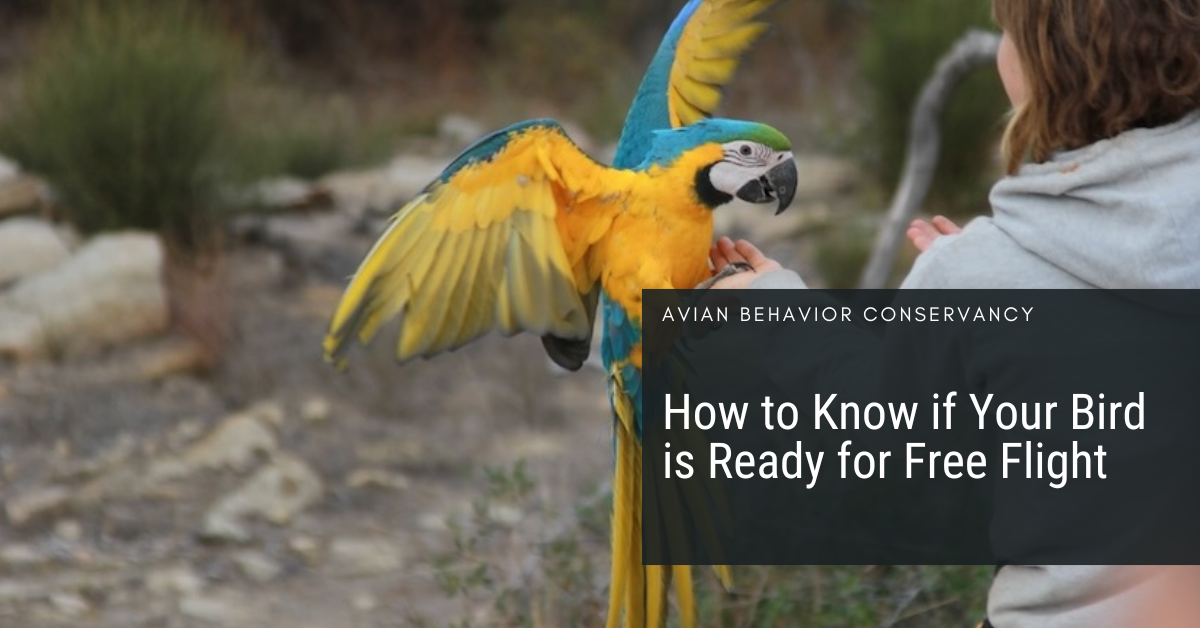
Free flight is often talked about as a milestone. The epitome of trust and welfare when it comes to coexisting with birds. While this is not a framework we embrace, we do believe strongly in the benefits of free flight for the birds and people that are suited for it.
In practice, free flight is not something you “start” and then have. It is something you maintain, adapt, and continuously reassess. The relationship is dynamic and challenging. Most of the meaningful work happens well after the first successful flights, once novelty wears off and real conditions begin to shape behavior.
Readiness for free flight is not just about whether a bird can fly reliably to a glove, hand, or a perch. It is about whether the bird, the humans, and the environment form a system that can support that behavior over time. This is where many problems quietly begin.
A bird may fly beautifully in familiar conditions and begin to struggle months later when seasons change, staffing shifts, schedules tighten, or expectations increase. These are not failures of the bird. They are signals that something in the system is no longer supporting the behavior as it was originally built.
When we talk about readiness, we are really talking about layers.
There are bird variables. Species-specific ranging tendencies matter. So does reinforcement history across contexts, not just in ideal training conditions. Emotional regulation under novelty, frustration, and environmental pressure plays a larger role in free flight than most people expect.
There are human variables that play a strong role in success as well. Handler fluency matters long before a bird leaves the glove. Timing, consistency, and decision-making under pressure are skills that must hold up when conditions are not ideal. In team-based programs, clarity and consistency across handlers often determines whether free flight remains stable over time.
Environmental variables such as wind, terrain, seasonal changes, and public presence all shape outcomes. Free flight that is successful in one season or location may require significant adjustment in another. Readiness includes recognizing when conditions have shifted enough that expectations need to shift as well.
Many of the challenges we are asked to troubleshoot do not appear at the beginning. They emerge later. Birds that respond well to one handler but not another. Programs that feel increasingly fragile as calendars fill. Teams that struggle to articulate why a flight is appropriate on one day and not another. These situations rarely benefit from adding more flying. They benefit from stepping back and examining the structure supporting the behavior.
So how do you know when your bird is ready? Is it based on instantaneous recall? Is it a fitness issue? Can you take the bird to an empty field on a bright sunny morning and find out?
A bird that is ready may have access to these things, but in our practice we ensure that it has more than that before their first free flight. Free flight is about coping with uncontrollable variables, and as mentioned, this is a practice of layering. There is no way to replicate these variables, and it can take months and even years before a bird is confidently flying in various conditions. Even still, our early controlled practice before free flight allows us to install some challenges that the bird has to navigate to see how well they handle discomfort and adversity. We don’t rescue them when they are upside down in bushes, they must fly out. They can’t always leave from a steady perch, they need diversity. These small things go a long way in developing resilience in the long run, even if your bird is never destined for free flight.
A well-designed flight workshop does not promise that participants will leave ready to fly birds independently. That would be unrealistic and irresponsible. What it can do is help experienced handlers and programs learn how to assess readiness more accurately, recognize early signs of drift, and make informed decisions before small issues become serious risks.
Free flight demands judgment. It demands patience. It demands the ability to say not today, even when everything appears outwardly fine. Those skills develop through experience, reflection, and honest conversation with others who understand what is at stake.
This is the space our upcoming flight workshop is designed to hold. It is not about shortcuts or guarantees. It is about building shared language around readiness, maintenance, and long-term success across species, seasons, and teams.
If you are already flying birds, or preparing to, you likely already know that free flight is not defined by a single moment. It is defined by the systems we build to support it, and by our willingness to keep learning long after the first flights are over